When you take a group mountaineering, in places such as the high mountains of Nepal, can you really make that expedition responsible?
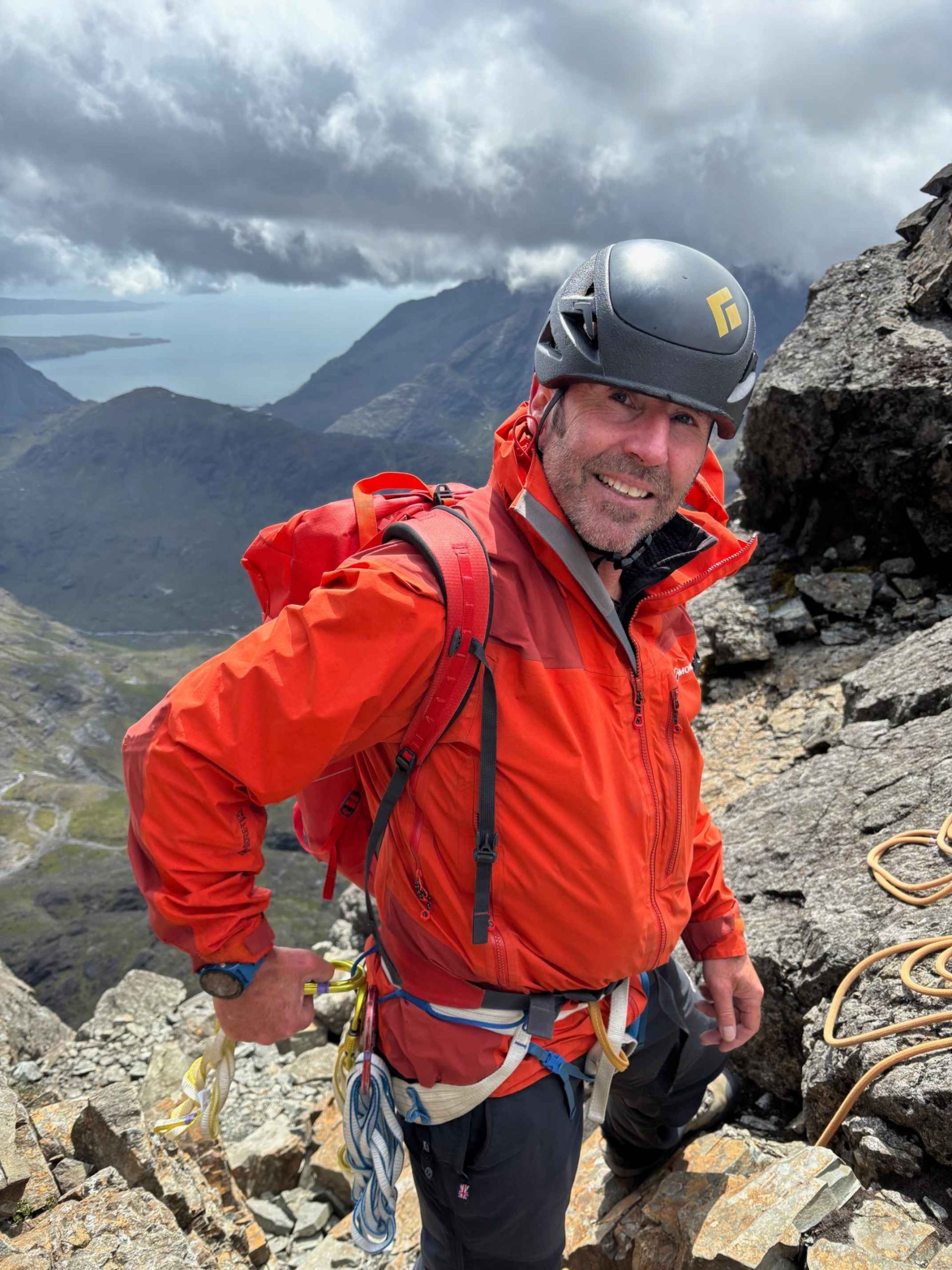
Monkey Mountaineering has been a member of the Organisation for Responsible Businesses for almost a year. The veteran-owned UK adventure travel company specialises in small-group trekking and mountaineering expeditions in the UK and worldwide, founded on the values of leadership, integrity, and sustainable adventure. In this post, Sam Marshall, founder of Monkey Mountaineering explains the steps he takes to ensure responsible mountaineering expeditions.
Running a responsible business sounds relatively straightforward. Operate ethically, look after people, consider your environmental impact and try to leave things a little better than you found them. Take that business into the mountains, particularly the high mountains of Nepal, Tanzania, Morocco or South America, and things become a little more complicated. Monkey Mountaineering is a small UK adventure travel company specialising in trekking, mountaineering and climbing. We take people to some extraordinary places, from Kilimanjaro and Everest Base Camp to high-altitude peaks and remote mountain regions. Inevitably, doing that has an impact. Our clients take long haul flights. We use accommodation, transport, food and other resources in communities that are sometimes relatively poor and where infrastructure is limited. Expeditions create waste. Mountain environments can be fragile. And behind every successful trip is a much larger group of people than the clients usually see such as guides, porters, cooks, drivers, muleteers, hotel staff and local suppliers. So, for us, responsible mountaineering isn’t simply about picking up litter or offsetting a flight. It starts much earlier than that.
People First
One of the reasons Monkey Mountaineering joined the Organisation for Responsible Businesses was that its approach to responsible business made sense to us. ORB talks about considering people, planet, profit and purpose when making business decisions. For an adventure travel company, the people part stretches a long way down the supply chain. When we operate overseas, we work with locally based partners, local guides and support teams. That means money spent on an expedition remains within the destination economy rather than importing services unnecessarily from the UK. But simply employing local people doesn’t automatically make tourism responsible. How much are people paid and what conditions do they work in are key aspects. Are porters carrying reasonable loads and do they have appropriate clothing and equipment? Are the people delivering the trip treated as professionals, or do we simply view them as a cheap source of labour? These are important questions and they can create uncomfortable conversations. Responsible business sometimes means asking suppliers questions about wages and challenging working practices or employment conditions. Sometimes, it would be much easier to look away and not ask. But that’s not responsible. For a small company like ours, that process is still evolving. We don’t pretend to have solved every problem in international adventure travel. What we are doing is continually asking questions, challenging how things are done and hopefully making better decisions as we continue to learn.
Small Groups
We deliberately chose to operate small groups. There are commercial consequences to that decision. Putting twelve or sixteen people on an expedition can be considerably more profitable than taking six or eight and at the same time, big group economics helps keep the price down. We regularly see competitors advertising the same itinerary for a price that we couldn’t even break even at. But group size affects almost everything. A smaller team places less pressure on accommodation, trails, campsites, water and waste systems. It requires fewer support staff and pack animals and it is easier to interact with local communities without overwhelming them. It also, in our view, enhances the experience. Guides get to know their clients. Problems, especially at altitude, are easier to spot. Decisions can be made around individuals rather than simply moving a large group through a fixed itinerary. For us, responsible mountaineering and good mountaineering frequently turn out to be the same thing. I’ve written elsewhere about why I think the adventure travel industry needs to think much more carefully about what it means when it describes a trip as a “small group”.
Safety
Safety isn’t always included in conversations about sustainability, but in adventure travel it should be.
Taking somebody to 5,000 or 6,000 metres isn’t the same as selling a beach holiday. Altitude, weather, terrain and remoteness all play a key role and all of them create responsibilities.
It means designing itineraries that allow sensible acclimatisation rather than simply trying to make a trip shorter and cheaper. It means selecting competent local guides and partners. It means having emergency and evacuation arrangements. And it means being prepared to change the plan.
Sometimes it means turning around.
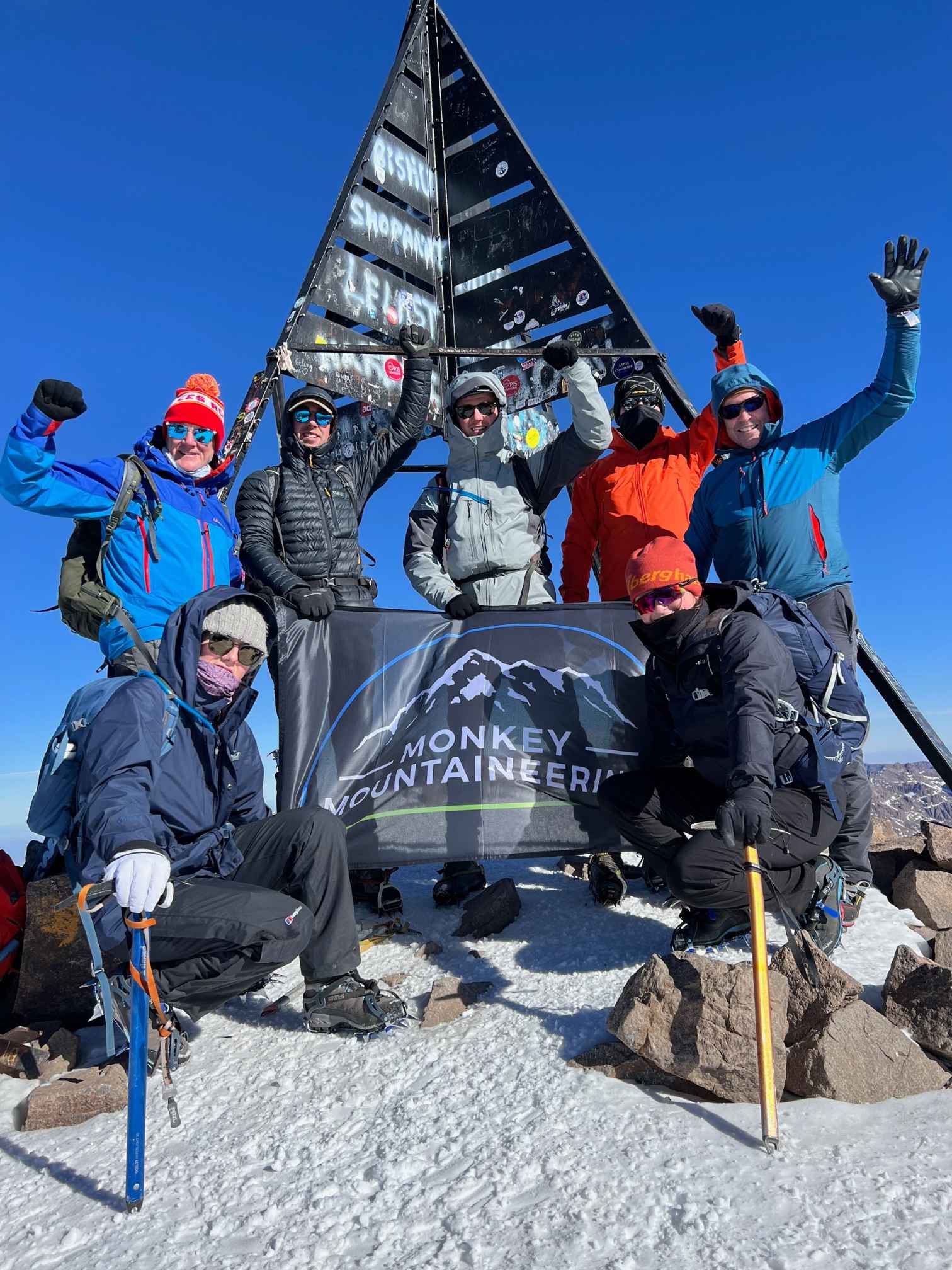
A summit is never worth someone’s health or life. We regard a successful expedition as one where good decisions have been made and everyone comes home safely, not simply one where someone stood on the summit.
That can be an uncomfortable commercial position in an industry where summit success, short itineraries and cheap deals sell trips, but responsible business occasionally means accepting that the best decision isn’t necessarily the one the customer hoped for. We’ve tried to make that explicit in our operating principles, which set out the standards we use to guide the decisions we make before and during our trips.
The Environmental Contradiction
There is an obvious problem when an international adventure travel company talks about environmental responsibility.
We encourage people to fly thousands of miles to climb mountains.
There is no credible way of pretending that doesn’t have an environmental cost.
What we can do though, is acknowledge it and concentrate on the things we can influence.
We encourage our clients to follow the “Leave No Trace” principles. We try to minimise waste and ask clients to take responsibility for what they carry into the mountain environment. We consider how our trips are supplied, where food and services come from and how much pressure our groups place on the places which we travel through.
We also favour human-powered travel once we’re in our destination. Trekking and mountaineering are wonderfully simple activities: for much of a trip, progress comes from simply putting one foot in front of another. Real footprints, not carbon footprints.
None of that makes an international expedition environmentally neutral. It does, however, mean thinking about the impact our decisions have rather than pretending there isn’t one.
Responsible Tourism Should Benefit the Destination
Tourism can place pressure on mountain communities, but it can also provide significant economic opportunities.
The question is where the money goes.
Local guides, accommodation providers, cooks, drivers, porters, muleteers, restaurants and suppliers can all benefit from adventure tourism. In some remote mountain areas those opportunities are massively important.
That’s one reason we prefer locally owned partners and suppliers wherever practical.
But economic benefit shouldn’t be the only measure.
Visitors are effectively guests in somebody else’s home. Local culture isn’t part of the scenery provided for our entertainment. Responsible travel means behaving with respect, understanding local customs and remembering that the people we meet aren’t simply part of the tourism infrastructure.
Some of the best memories from expeditions have very little to do with summits.
Responsibility Doesn’t Stop with the Trip
Being a responsible mountaineering company isn’t only about what happens overseas.
Monkey Mountaineering is also a UK business.
That means complying with the legislation that applies to the trips and services we sell, protecting customers’ money appropriately, carrying suitable insurance, paying suppliers properly, maintaining competent staff and instructors, managing risk and being honest about what customers are buying.
Much of that isn’t particularly exciting.
Customers rarely book an expedition because they are impressed by the company’s risk assessments, supplier due diligence or financial protection arrangements.
But those things are part of responsible business too.
Perhaps especially so, because much of responsible business happens where customers can’t see it.
Not a Badge
There is always a danger that sustainability and responsible business become marketing language.
Put the right logo on your website, publish a policy, talk about sustainability, throw in a few buzz words and the job appears to be done.
It isn’t.
I’ve written before about the danger of sustainability becoming a label rather than something we can meaningfully define and measure, particularly in adventure travel in remote mountain regions. Sustainable Adventure Travel in Remote Mountain Regions: Beyond the Label explores that question in more detail.
Membership of organisations such as ORB should be a prompt to keep looking at your business and asking the awkward questions.
Could we reduce our environmental impact? Are the people within our supply chain really being treated fairly? Are our local partners genuinely aligned with our values? Could an itinerary be safer? Are we putting too much pressure on a particular place? Are we being transparent with our customers?
And occasionally, perhaps we should be asking if we ought to be doing something differently altogether?
The answers aren’t always convenient.
Leaving Something Worthwhile Behind
Mountaineers have traditionally talked about leaving nothing but footprints and indeed, that’s a principle at the heart of the “Leave No Trace” policy.
It’s a great starting point environmentally, but perhaps responsible mountaineering should aim a little higher.
If we bring people into mountain communities, spend money with local businesses, provide worthwhile employment, treat people fairly, respect the environment and help our clients understand the places they visit, perhaps tourism can leave something positive behind too.
Monkey Mountaineering isn’t perfect, and truly responsible business isn’t a destination that we’ve fully arrived at yet.
For me though, it’s more about how we make decisions.
Perhaps that’s where responsible business and mountaineering have most in common.
In the mountains, you rarely have perfect information. Conditions change, plans evolve and sometimes you find yourself having to make difficult decisions.
You take stock, make the best decision you can with the information available, and try to keep moving in the right direction.
Running a responsible business isn’t really that different.
Sam Marshall is the veteran-founder of Monkey Mountaineering, a small group mountaineering and trekking travel company.
For more information:
https://monkeymountaineering.com
Tel: 01765 773015